What qualifies as a commercial HVAC capital improvement project?+
A commercial HVAC capital improvement project typically involves a major replacement, retrofit, controls upgrade, ventilation improvement, or phased modernization intended to improve long-term reliability, efficiency, comfort, serviceability, or asset value. The appropriate scope depends on equipment condition, operating requirements, budget, access, and expected useful life.
What are the signs a commercial HVAC system may be due for a capital replacement?+
Common signs include equipment approaching or past its expected service life, repeated repairs on the same failure, hard-to-find parts, rising energy use, uneven comfort or tenant complaints, and repair costs that keep climbing relative to the cost of replacement. Denair reviews these together with equipment condition and operating risk before recommending a repair, retrofit, or replacement.
How do I decide whether to repair, retrofit, or replace HVAC equipment?+
Denair reviews equipment age, condition, repair history, parts availability, energy use, operating risk, access, and expected remaining life. A repair may address an isolated failure, a retrofit may modernize the main weakness, and replacement may be appropriate when multiple components are reaching end of life. The recommendation is based on lifecycle value rather than upfront cost alone.
Can Denair help identify Con Edison or NYSERDA incentives?+
Yes. Denair can identify current
Con Edison and NYSERDA opportunities that may help eligible projects offset qualifying costs. Program availability, funding, technical requirements, and customer eligibility can change, so incentive participation and final amounts must be confirmed for each project.
Can HVAC capital improvements be completed in occupied buildings?+
Yes. Denair plans work around occupancy, operating hours, equipment access, shutdown windows, temporary service requirements, and building priorities. Projects can be phased to reduce disruption, but the final schedule depends on the approved scope, equipment lead times, permits, site conditions, and coordination requirements.
How can an HVAC capital project support Local Law 97 planning?+
Equipment right-sizing, controls improvements, ventilation optimization, electrification, and other efficiency measures can reduce energy use and associated emissions. Denair evaluates
applicable Local Law 97 considerations during project planning, while final compliance depends on the building’s complete emissions profile, annual reporting, and verified performance.
Does Denair manage HVAC capital improvement projects across all five NYC boroughs?+
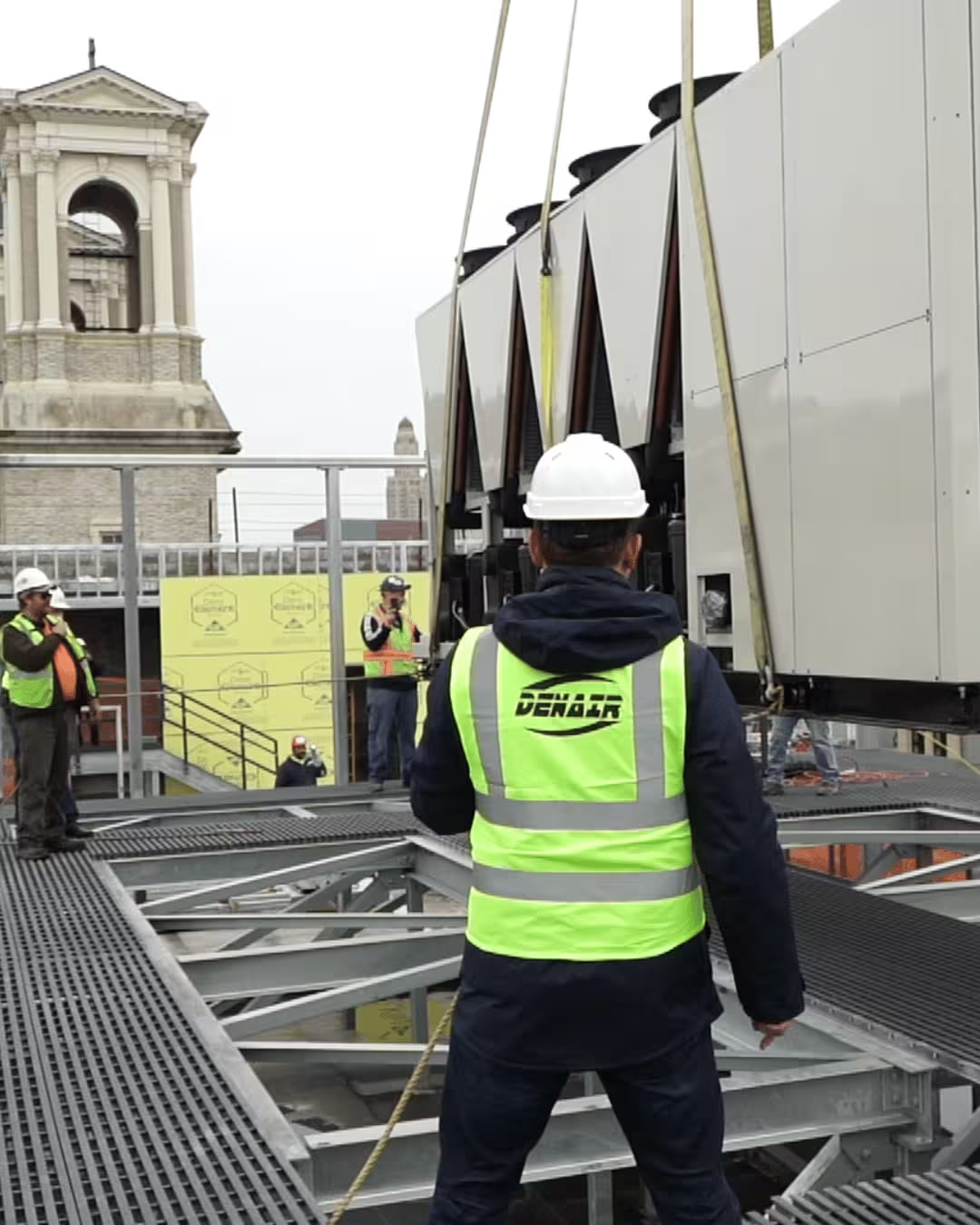
Yes. Denair manages commercial HVAC capital improvement projects in Brooklyn, Manhattan, Queens, The Bronx, and Staten Island. Services can include assessment, engineering coordination, equipment replacement, retrofits, controls, commissioning, documentation, training, and ongoing support.
Does Denair provide support after project completion?+
Yes. Denair can support completed projects with
preventative maintenance, service agreements, repairs, controls optimization, performance review, and
24/7 emergency response. The post-project service scope is confirmed based on the installed systems and the building’s operating requirements.