Con Edison's Affordable Multifamily Energy Efficiency Program (AMEEP) offers a financial solution: up to $2,000 per dwelling unit in direct rebates for comprehensive HVAC and building envelope upgrades that simultaneously reduce carbon emissions and offset capital costs. This guide explains exactly how Manhattan property managers can access these incentives, which upgrades qualify, how incentives are calculated, and how to get started.
TLDR:
- AMEEP pays up to $2,000/unit for comprehensive retrofits reaching 150+ points
- Boiler replacements, HVAC controls, and building envelope work contribute the most points
- Mid-project payments unlock 40% of incentives during construction
- AMEEP upgrades directly reduce Local Law 97 carbon penalties
- Qualified HVAC contractors like Denair HVAC help maximize points and minimize net costs
What Are Con Edison Multifamily Energy Efficiency Services?
Con Edison, in partnership with NYSERDA and National Grid, administers energy efficiency programs specifically designed for multifamily buildings in NYC. The goal: reduce building energy consumption while offsetting upgrade costs through direct financial incentives.
Who Qualifies
These programs target owners or managers of existing multifamily buildings with 5 or more residential units in Con Edison's service territory. Eligible building types include:
- Market-rate rental apartments
- Rent-stabilized and rent-controlled properties
- Co-ops and condominiums
- Mixed-use buildings with residential units
New construction is explicitly excluded—only existing buildings qualify.
Why HVAC Matters Most
Natural gas accounts for 62% of total energy use in NYC multifamily properties, with space heating and domestic hot water driving 70% of site energy consumption. That concentration makes HVAC and heating systems the highest-impact target for efficiency upgrades. It's also the fastest path to meaningful carbon reductions under Local Law 97—the compliance pressure most Manhattan multifamily owners are already facing.
The AMEEP Pathways: Comprehensive vs. Non-Comprehensive for NYC Buildings
The Affordable Multifamily Energy Efficiency Program (AMEEP) serves as the primary Con Edison multifamily incentive vehicle, co-administered with NYSERDA. Buildings must provide affordability documentation showing that at least 25% of units are occupied by households earning no more than 80% of Area Median Income.
Comprehensive Pathway
The Comprehensive pathway is designed for whole-building energy retrofits or projects involving multiple building systems. It offers three key advantages over the Non-Comprehensive route:
Higher per-unit incentives — calculated on a dollar-per-dwelling-unit basis using a two-tier structure:
| Tier | Minimum Points | Incentive Rate |
|---|---|---|
| Tier 1 | 100-149 points | $1,500 per unit |
| Tier 2 | 150+ points | $2,000 per unit |
Projects accumulate points by installing eligible measures. Each upgrade carries a specific point value, and the total determines which tier the building qualifies for.
One standout feature: buildings receive 40% of total incentives once measures comprising 60% of the project's points have been installed and inspected. For large capital projects, this mid-project payment meaningfully improves cash flow.
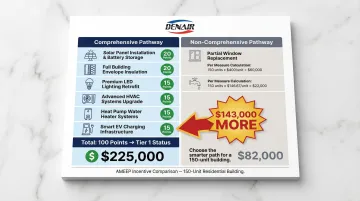
For example, a 150-unit Brooklyn building installs:
- Boiler replacement (40 points)
- Domestic hot water heater (30 points)
- Pipe insulation (10 points)
- Air sealing (10 points)
- Common area lighting (5 points)
- In-unit LEDs and aerators (5 points)
Total: 100 points = Tier 1 = $1,500 × 150 units = $225,000 in incentives
FlexTech Audit Subsidies: Large projects can access NYSERDA FlexTech funding to cover up to 75% of the cost of a qualifying energy audit, reducing the barrier to entry for complex whole-building retrofits.
Non-Comprehensive Pathway
Not every building needs a full retrofit. The Non-Comprehensive pathway fits buildings replacing or upgrading only one or a few systems, with incentives calculated on a per-measure basis rather than per dwelling unit.
Using the same 150-unit Brooklyn building as a comparison, but only installing:
- Boiler replacement: $6 per MBH = approximately $80,000
- Pipe insulation: $5-$9 per linear foot = approximately $2,000
Total: ~$82,000 in incentives
The numbers make the case clearly: bundling measures under the Comprehensive pathway produced $225,000 versus $82,000 here. If your building is due for multiple system upgrades, sequencing them into a single Comprehensive project will capture significantly more program funding.
HVAC and Building Upgrades That Qualify for Con Edison Rebates
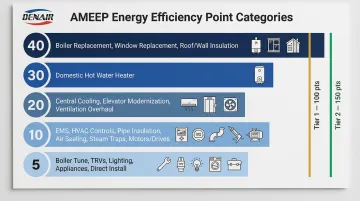
To reach the 100-point or 150-point thresholds, building owners must combine eligible measures. Here's the complete points breakdown:
40-Point Measures (Highest Impact):
- Boiler replacement (hot water, steam, or condensing)
- Window replacement
- Roof or wall insulation
30-Point Measures:
- Domestic hot water heater replacement
20-Point Measures:
- Central cooling systems
- Elevator modernization
- Ventilation overhaul (e.g., energy recovery ventilators)
10-Point Measures:
- Energy Management System (EMS)
- HVAC electric controls (BMS, smart thermostats)
- Hot water and steam pipe insulation
- Air sealing package
- Steam traps
- Motors and drives (VFDs, EC motors)
5-Point Measures:
- Boiler clean and tune
- Thermostatic Radiator Valves (TRVs)
- Common area lighting
- In-unit appliances (dishwashers, refrigerators)
- In-unit direct install (LEDs, faucet aerators, showerheads)
HVAC Measures: The Highest-Impact Category
HVAC-related upgrades—boiler replacements, HVAC controls, energy management systems, central cooling, and ventilation—make up the largest single category of eligible measures and carry the most point value toward Tier 1 or Tier 2 qualification.
EMS Technical Requirements
Installing an EMS is one of the most cost-effective upgrades on this list. Research from ACEEE shows EMS installations in multifamily buildings yield an average 16% reduction in fuel consumption.
To qualify for AMEEP incentives and earn 10 points under the Comprehensive pathway, an EMS installation must meet these technical requirements:
- Remote access or web-based monitoring capability
- Outdoor reset functionality
- Boiler staging for multi-boiler systems (lead/lag verification required)
- Apartment sensors installed in at least 25% of units, distributed across various floors
- Four auxiliary sensors: stack temperature, domestic hot water supply, outdoor weather, and heating water supply/return or condensate
Getting the points right requires more than selecting eligible equipment—scoping, code compliance, and incentive documentation all involve technical details that vary by project. Denair HVAC is a registered mechanical contractor with 19 years of experience working on multifamily buildings in Manhattan. The team can assess your building, identify which combination of upgrades hits your target threshold, and handle installation to meet AMEEP requirements.
For Non-Comprehensive projects, incentive amounts vary by measure. Check the AMEEP Downstate Incentive Fact Sheet at nyserda.ny.gov for current per-measure dollar figures, as NYSERDA updates these on a rolling basis.
How Con Edison Incentives Are Calculated for Manhattan Multifamily Properties
Step-by-Step Comprehensive Pathway Calculation
Step 1: Tally points per measure installed Step 2: Determine which tier is reached (100+ points = Tier 1; 150+ points = Tier 2) Step 3: Multiply the per-dwelling-unit incentive rate by the total number of units
Manhattan Advantage: Manhattan buildings with higher unit counts generate proportionally larger incentive totals. A 200-unit Manhattan co-op reaching Tier 2 (150 points) receives $2,000 × 200 = $400,000 in baseline incentives—making large Manhattan rental buildings and co-ops especially well-positioned to benefit.
Cost-Effectiveness and Building Size Thresholds
Projects must meet a Total Resource Cost test, though individual prescriptive measures are pre-screened at the program level. Key eligibility thresholds by pathway include:
- Standard Comprehensive: Minimum 5 residential units
- Gas Fast Track: Between 5 and 50 units
- Electric Fast Track: Minimum 5 units, focused on all-electric measures
- Fuel Conversion: Minimum 5 units converting from fossil fuel heating
Mid-Project Payment Mechanics
The Comprehensive pathway offers a one-time mid-project incentive payment to reduce upfront capital burdens:
- At least 60% of the project's total points must be fully installed before requesting payment
- After submitting a Mid-Project Statement of Completion and passing post-inspection, the program releases 40% of the total incentive
- The remaining 60% is paid upon final project completion
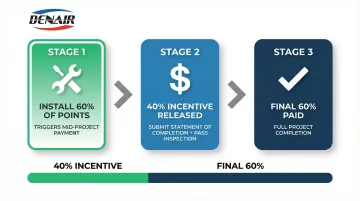
For large Manhattan retrofits, this structure means property managers can apply early incentive funds directly toward later construction phases — reducing the need for bridge financing.
Maximum Incentive Coverage Limits
AMEEP enforces strict caps to ensure incentives don't exceed project costs:
- Con Edison-only projects: capped at 85% of total eligible measure cost, or $1,000,000 — whichever is lower
- Joint Con Edison/National Grid projects: capped at 70% of total eligible measure cost, or $500,000
Based on NYSERDA's Building Electrification and Decarbonization Cost study, typical installed costs for Manhattan building upgrades include:
| Upgrade Type | Building Size | Estimated Cost Range |
|---|---|---|
| Air Source Heat Pump | Small (2-19 units) | $13,000-$30,100 per unit |
| Air Source Heat Pump | Large (20+ units) | $19,400-$42,900 per unit |
| Ground Source Heat Pump | Small (2-19 units) | $29,600-$42,900 per unit |
| Ground Source Heat Pump | Large (20+ units) | $40,800-$56,000 per unit |
For a 100-unit building installing a comprehensive retrofit costing $500,000, an 85% cap would yield a maximum incentive of $425,000, leaving a net owner cost of $75,000.
How Manhattan's Local Law 97 Makes These Programs Even More Urgent
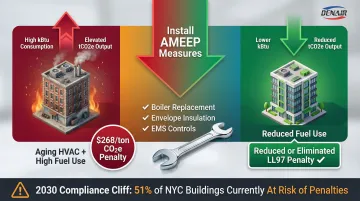
NYC Local Law 97, part of the Climate Mobilization Act, imposes escalating carbon emission caps on buildings over 25,000 square feet starting in 2024. Buildings exceeding their annual emissions limits face $268 per metric ton of CO2 equivalent over the cap.
The Compliance Cliff
While the initial 2024–2029 caps are relatively lenient, the 2030–2034 caps require deep reductions. Only 49% of multifamily buildings currently meet the stricter 2030 LL97 limits, leaving 51% at risk of significant fines if no action is taken.
How AMEEP Upgrades Reduce LL97 Penalties
Con Edison AMEEP upgrades directly reduce a building's carbon emissions by lowering raw fuel consumption. Local Law 97 calculates annual GHG emissions by multiplying annual fuel use by specific emissions coefficients:
| Energy Source | 2024-2029 Coefficient | 2030-2034 Coefficient |
|---|---|---|
| Natural Gas | 0.00005311 tCO2e/kBtu | 0.00005311 tCO2e/kBtu |
| Grid Electricity | 0.000288962 tCO2e/kWh | 0.000145 tCO2e/kWh |
Installing AMEEP measures — boiler replacements, envelope insulation, and EMS controls — reduces a building's kBtu consumption. Lower consumption means lower tCO2e output, which directly cuts exposure to the $268/ton penalty.
Manhattan's Urgency
Manhattan's dense multifamily building stock and older heating infrastructure put a large share of buildings out of compliance or close to the line. Participating in Con Edison AMEEP now lets owners capture utility rebates that offset upgrade costs — before fine exposure escalates in the 2030–2034 compliance period.
How to Apply for Con Edison Multifamily Energy Efficiency Programs in Manhattan
Application Process Overview
- Start your application by emailing Multifamily@coned.com or visiting nyserda.ny.gov/AMEEP.
- Schedule an energy audit (recommended for AMEEP Comprehensive projects) — an authorized contractor or Energy Service Provider conducts an audit to define the project scope. NYSERDA FlexTech subsidizes up to 75% of this cost for affordable buildings.
- Select a qualified contractor for equipment installation.
Denair HVAC's Role in the Process
As a registered mechanical/HVAC contractor serving Manhattan, Denair HVAC supports property managers and building owners at every stage of this process. That includes:
- Developing project scope and equipment specifications
- Preparing documentation required for incentive qualification
- Coordinating installation to meet program timelines and NYC code requirements
Pre-Application Checklist
Before applying, building owners should prepare:
- Affordability documentation: HUD contracts, NYSDHCR/NYCHPD regulatory agreements, LIHTC award notices, or rent rolls with AMEEP calculation spreadsheet
- Building information: Address, unit count, and building square footage
- Utility account information: Con Edison gas or electric customer status
- System assessment: General sense of which systems are due for replacement or upgrade
Frequently Asked Questions
What multifamily buildings are eligible for Con Edison energy efficiency programs in NYC?
Most Con Edison customers with 5+ residential units qualify, including market-rate rentals, rent-stabilized buildings, co-ops, and condos. AMEEP additionally requires affordability documentation confirming at least 25% of units are occupied by households earning ≤80% AMI.
What HVAC upgrades qualify for Con Edison multifamily rebates?
Main HVAC-related qualifying measures include boiler replacements (40 points), domestic hot water heater replacements (30 points), central cooling systems (20 points), HVAC controls (10 points), energy management systems (10 points), ventilation upgrades (20 points), and steam traps (10 points). Each carries a specific point value under the AMEEP Comprehensive pathway.
How much does Con Edison charge per kWh in NYC?
Con Edison's electricity rates vary by service classification and season. Current residential and small commercial delivery rates range from 14.67 cents/kWh (winter) to 16.26 cents/kWh (summer), with blended rates (supply + delivery) averaging around 18.6 cents/kWh. Energy efficiency upgrades reduce total kWh consumption, cutting utility costs at those blended rates.
Can Con Edison incentives be combined with other NYC or federal programs?
AMEEP incentives can be stacked with IRA Section 179D deductions (up to $5/sq ft) and NYC HPD/HDC financing programs. Note that IRS rules require reducing the tax basis by the rebate amount, and combined incentives cannot exceed 100% of project cost.
How long does it take to receive Con Edison energy efficiency incentives?
The timeline varies by project complexity. Comprehensive pathway projects include a mid-project payment milestone (40% of incentives after 60% of points are installed), with final incentive payments issued after project completion and verification. Owners have up to two years from Notice to Proceed to complete installations.
How do I talk to someone at Con Edison about multifamily energy programs?
Reach Con Edison's multifamily team at Multifamily@coned.com or browse program resources at nyserda.ny.gov/AMEEP. For project scoping and installation, contact Denair HVAC at (212) 776-1333 — an authorized contractor can also handle utility coordination on your behalf.